Despite being a widely loved breed, the Staffordshire Bull Terrier is often misunderstood. There are many myths surrounding the breed, leading to misconceptions that can impact their reputation. Let’s debunk some of the most common myths.
Myth 1: Staffordshire Bull Terriers Are Naturally Aggressive
One of the most persistent misconceptions is that Staffordshire Bull Terriers are inherently aggressive. In reality, a well-bred and properly raised Stafford is a stable, affectionate, and people-oriented companion. While the breed is physically strong and naturally confident, aggression towards humans is not typical, is undesirable, and is considered highly uncharacteristic of the breed.
As with all dogs, temperament is influenced by a combination of genetics, early socialisation, training, and environment. A responsible approach to breeding and upbringing plays a crucial role in shaping behaviour. The breed’s historical background should always be considered—particularly in interactions with other animals—but aggression towards people is not a defining trait of the Staffordshire Bull Terrier.
Myth 2: They Are the Same as a Pit Bull
The Staffordshire Bull Terrier is a distinct and well-defined breed with its own history, breed standard, and purpose. The term “pit bull”, however, does not refer to a single, universally recognised breed. Instead, it is a broad and informal label commonly used to describe a group of bull-type dogs and mixed breeds that share certain physical traits.
In some countries, the American Pit Bull Terrier is recognised by specific registries, while in others it is not recognised at all and may be subject to breed-specific legislation or outright bans. In many cases, dogs described as “pit bulls” are in fact mixed-breed dogs with no clear pedigree or breed standard, often grouped together based on appearance rather than ancestry.
Staffordshire Bull Terriers differ clearly from these dogs. They are generally smaller, more compact, and were historically developed with a strong emphasis on human companionship in addition to their original working roles. Their temperament, breed standard, and breeding history are distinct and should not be confused with those of other bull-type dogs or unclassified mixes.
Confusing Staffordshire Bull Terriers with so-called “pit bulls” is therefore inaccurate and contributes to misunderstandings about the breed.
Myth 3: They Are Not Good with Children!
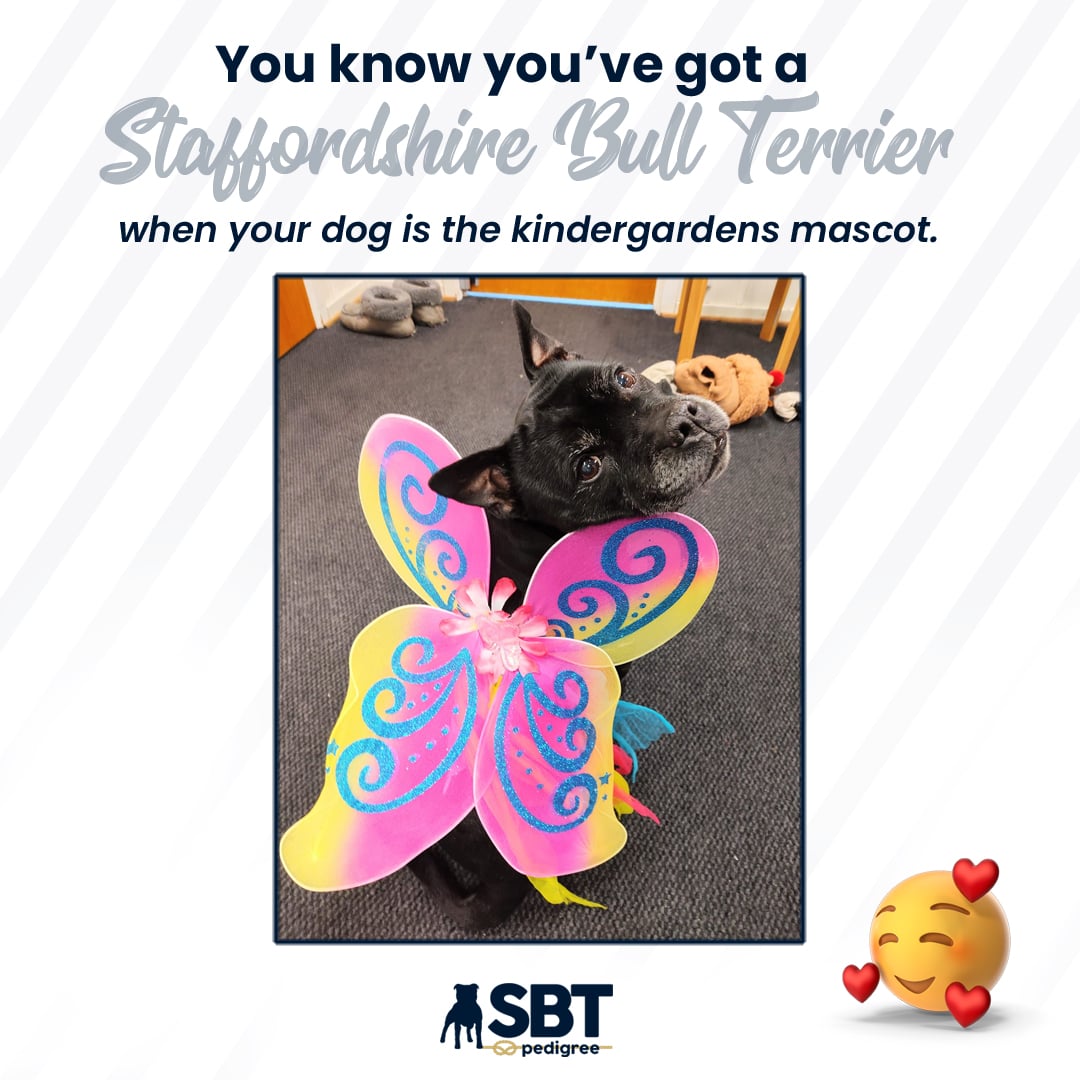
The truth is quite the opposite. Staffordshire Bull Terriers are widely known for their patience, tolerance, and affection towards children. This reputation is the reason they have sometimes been referred to as “nanny dogs,” reflecting their historic image as family companions rather than any caregiving role.
That said, no dog—regardless of breed—should ever be left unsupervised with children. Responsible supervision, education of both dog and child, and respectful interaction are essential to ensure safe and positive relationships.
Myth 4: Staffords Require Harsh Training!
Because of their strength and determination, some people believe Staffordshire Bull Terriers need firm or dominant training methods. In reality, the breed responds best to positive reinforcement, consistency, and clear communication. Harsh training methods are unnecessary and can damage trust, reduce confidence, and create behavioural problems.
Reward-based training builds reliability while preserving the breed’s enthusiasm and willingness to engage, resulting in a more stable and cooperative dog.
Myth 5: They Are Difficult to Train!
Staffordshire Bull Terriers are intelligent, capable learners with a strong desire to interact with their owners. While they can be independent thinkers, this does not make them difficult to train. With a structured approach, clear expectations, and motivation-based methods, they are highly trainable and often enjoy learning new skills.
Early training and socialisation are especially important to help them develop into well-balanced adults.
Myth 6: They Shouldn’t Be Around Other Dogs!
While some Staffordshire Bull Terriers may show same-sex aggression or reduced interest in unfamiliar dogs, not all individuals are reactive towards other dogs. Socialisation from an early age plays a significant role in how a Stafford behaves around other animals. That said, it should never be expected that an adult Stafford will be playful with unfamiliar adult dogs, as many mature dogs of various breeds naturally prefer neutrality over interaction.
A Stafford was bred to be bold, fearless, and totally reliable. In practice, this describes a dog that is mentally stable and confident, not one that seeks conflict. However, this confidence also means they should not be expected to tolerate persistent pressure or bullying from other dogs. Like many strong, self-assured breeds, clear and respectful communication from other dogs is important.
Dog communication can be subtle and fast, and signals are not always obvious to the untrained eye. Responsible handling therefore involves understanding canine body language, choosing appropriate situations, and recognising when interaction is unnecessary rather than problematic.
When a dog is young, inexperienced, or when the situation is unfamiliar, thoughtful environment choices are often the best form of prevention. Calm, structured settings and interaction with known dogs allow a Stafford to develop social confidence without unnecessary pressure.
With attentive ownership and sensible management, Staffordshire Bull Terriers are steady, predictable, and trustworthy companions whose confidence is expressed through stability rather than confrontation.
The Staffordshire Bull Terrier is a wonderful, loyal, and affectionate breed. Unfortunately, myths and misconceptions often overshadow their true nature. With proper training, socialisation, and responsible ownership, Staffords prove to be loving and well-balanced companions.